
Meet the Artist on Our Walls
Amy Gulick's work and why it belongs in Anchorage
Most Alaska creators, whatever the vocation, make it their life’s work to support the landscapes, people, and cultures of the Great Land. Amy Gulickis one such artist. Through her nature and conservation photography, books, and public speaking appearances, Gulick’s storytelling transports Alaska’s fragile and ever-changing environment to the eyes and ears of her fans.
Documenting the relationships between nature and people, Gulick is a founding Fellow of the International League of Conservation Photographers, and has won awards from the Alaska Conservation Foundation and Alaska Wilderness League. Her books, The Salmon Way and Salmon in the Trees, focus on the circuitous connection among humans, wild salmon, and the greater biomes in which both exist.
Amy Gulick’s photography is now on display at the Copper Whale Inn, not because it is decorative, but because it’s intentional. We believe that the history and character of the inn reflects the values and goals we strive to emulate in all that we do. Gulick’s beautiful photographs remind our guests that we are all connected to nature, today and always.
We had the opportunity to chat with Amy Gulick about this partnership, and what she’d like guests to know about visiting Alaska. If you’re staying with us, be sure to take advantage of this opportunity, and browse the photographs lining the Copper Whale Inn walls.
(Questions were slightly edited for context.)
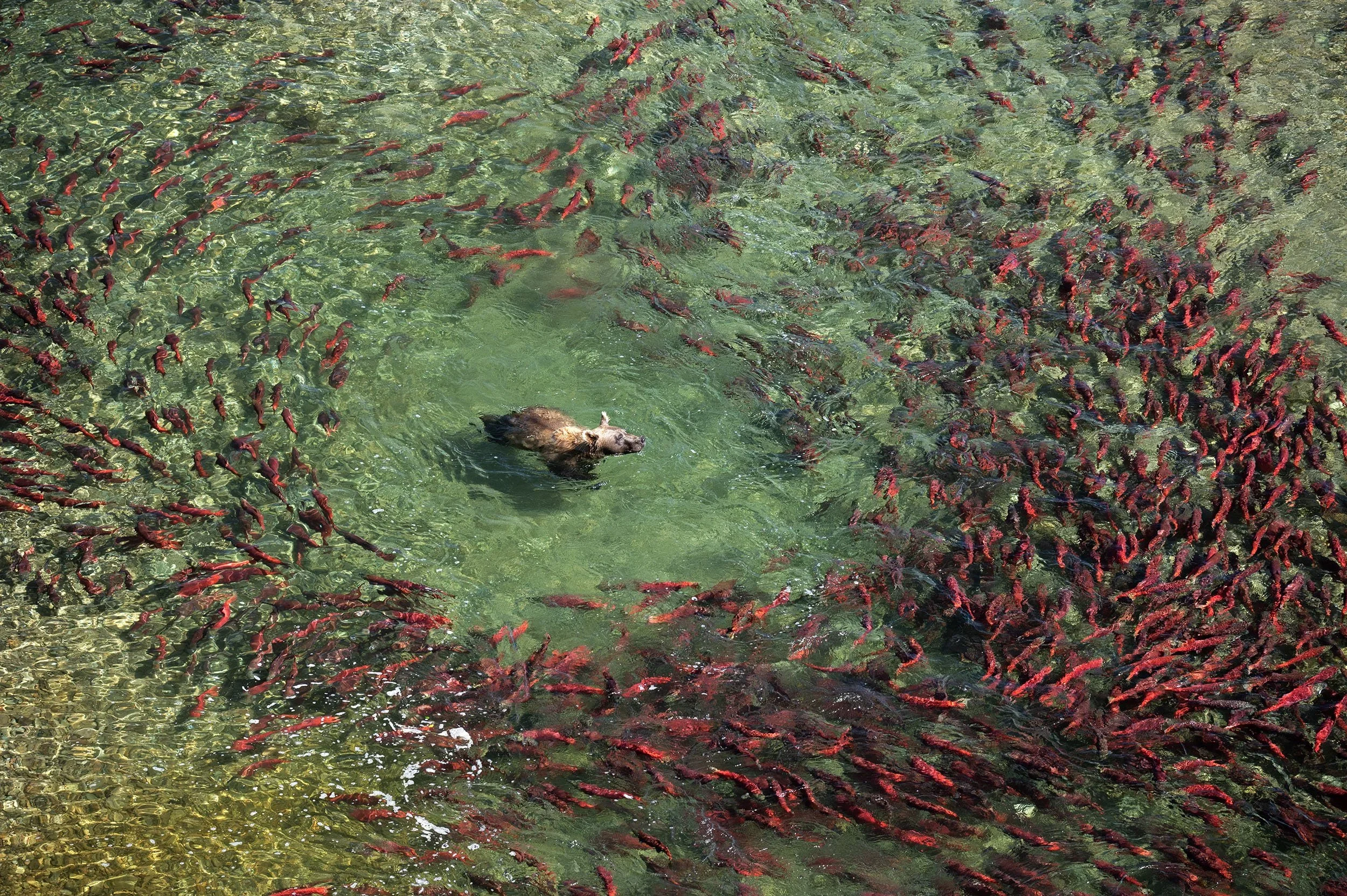
Image credit: Amy Gulick
Copper Whale Inn: How did the partnership with Copper Whale Inn develop?
Amy Gulick: I have been a guest of Copper Whale for more than a decade. What I love about the inn is that it’s cozy, welcoming, and I always meet fellow travelers with a passion for Alaska adventure. And the people who own and run the inn have become like a family to me, so it was a no-brainer to want to display my photographs of Alaska there.
CW: How did you choose the photographs that are there/will be there? Was there a theme you wanted guests to understand or feel?
AG: Most travelers who visit Anchorage are on their way to Denali National Park. Denali mountain is North America’s highest peak at 20,310 feet, and most visitors are thrilled if they are able to see it. But what many of them don’t know is that the park, established in 1917, was the first national park specifically created to protect wildlife. So one of my photographs on display, titled “Tall & Mighty," portrays a brown bear in the foreground with Denali mountain towering above in the background. Other photographs on display speak to the abundance of Alaska: a brown bear in a river surrounded by bright red sockeye salmon, and birch bark baskets overflowing with wild blueberries, cranberries, blackberries, and salmonberries.
Image credit: Amy Gulick
CW: If you were talking with Copper Whale Inn guests, what would you like them to know/understand about Alaska?
AG: Alaska is so much more than just glaciers, whales, and bears. It’s a place where ecosystems are intact, wildlife has room to roam, Indigenous cultures practice their traditional ways, and people are very much a part of the land.
CW: How can people learn more and take their own active steps to be stewards, especially in Southeast Alaska, as a current fight over the Tongass National Forest continues?
AG:Many terrific conservation organizations are working to conserve Alaska. The Alaska Conservation Foundation is a good starting place to learn about which organizations are working on issues in various parts of the state. Chances are good that most visitors will experience national public lands in Alaska — a park, forest, wildlife refuge, etc. These lands have been entrusted to ALL Americans, and it’s our responsibility to take care of these lands.
CW: Anything else you want people to know?
AG: My advice to those visiting Alaska: be a traveler, not a tourist. Seek out authentic experiences and get to know local people. And remember that public lands are in our hands.
It’s the visitors to Alaska today who have the potential to become the stewards of Alaska tomorrow. Below is a list of resources for those interested in the conservation of these wild lands, the different species of wildlife, and ways to support efforts to protect this unique resource for generations to come.
Alaska Conservation Foundation: https://alaskaconservation.org/
Alaska Wilderness League:www.alaskawild.org
National Forest Foundation: www.nationalforests.org